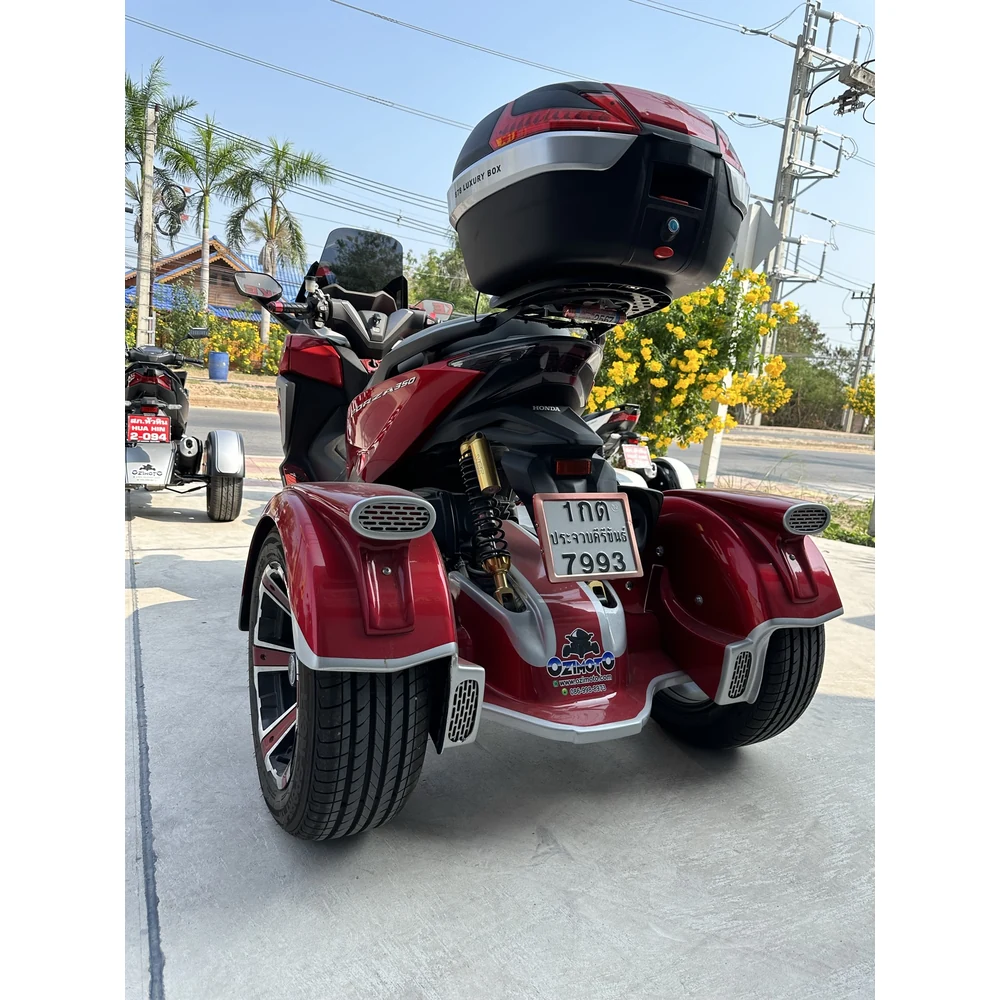
1. The motorcycle is assessed before the project is promised
The starting platform, condition and intended use determine whether the project makes sense. A customer-owned bike needs a physical assessment before Ozimoto can confirm compatibility, scope or price.
- Make, model, year and mileage
- Mechanical and structural condition
- Rider, passenger and luggage requirements
- Controls, access and parking constraints
2. The job is defined before the finish
Paint is visible, but it is not the first decision. Width, loading, seating, storage, reverse manoeuvring and control requirements shape the engineering brief. Only then should bodywork and finish be resolved.
3. The rear assembly changes how the machine behaves
Ozimoto’s current conversion information describes a purpose-built rear axle assembly with a true differential and reverse gear. The differential allows the rear wheels to rotate at different speeds through a corner; reverse makes low-speed manoeuvring more practical.
- Rear structure and axle assembly
- Differential and reverse system
- Braking, suspension and wheel integration
- Bodywork and protection around the new structure
4. Bodywork makes the engineering feel intentional
A well-resolved conversion should not look like unrelated parts were attached after the motorcycle left the factory. Proportion, shut lines, wheel coverage, storage and colour matching need to be considered together.
5. Testing and handover are part of the build
The workshop checks the completed machine before handover and explains its controls and practical differences to the owner. Adaptive projects may require further fitting or refinement once the rider has used the machine.
- Braking and low-speed operation
- Steering, tracking and stability checks
- Fastener, tyre and fluid inspection
- Owner orientation and service advice
This guide is general information, not a quotation, medical advice or a guarantee of registration or road legality. The motorcycle, rider and jurisdiction must be assessed individually.